.svg)


.svg) Search
Search


March was a month of sharp contrasts across food, beverage, and consumer goods. On one side, companies with conviction made decisive moves, billion-dollar acquisitions, strategic portfolio bets, and leadership decisions designed for stability. On the other, some of the industry's most recognized names found themselves in courtrooms, receivership, or both. The common thread is that the market is rewarding clarity and punishing ambiguity, and the gap between the two is widening fast.
Here are seven stories that defined March.
1. Gallo Acquires Four Roses Bourbon for $775 Million
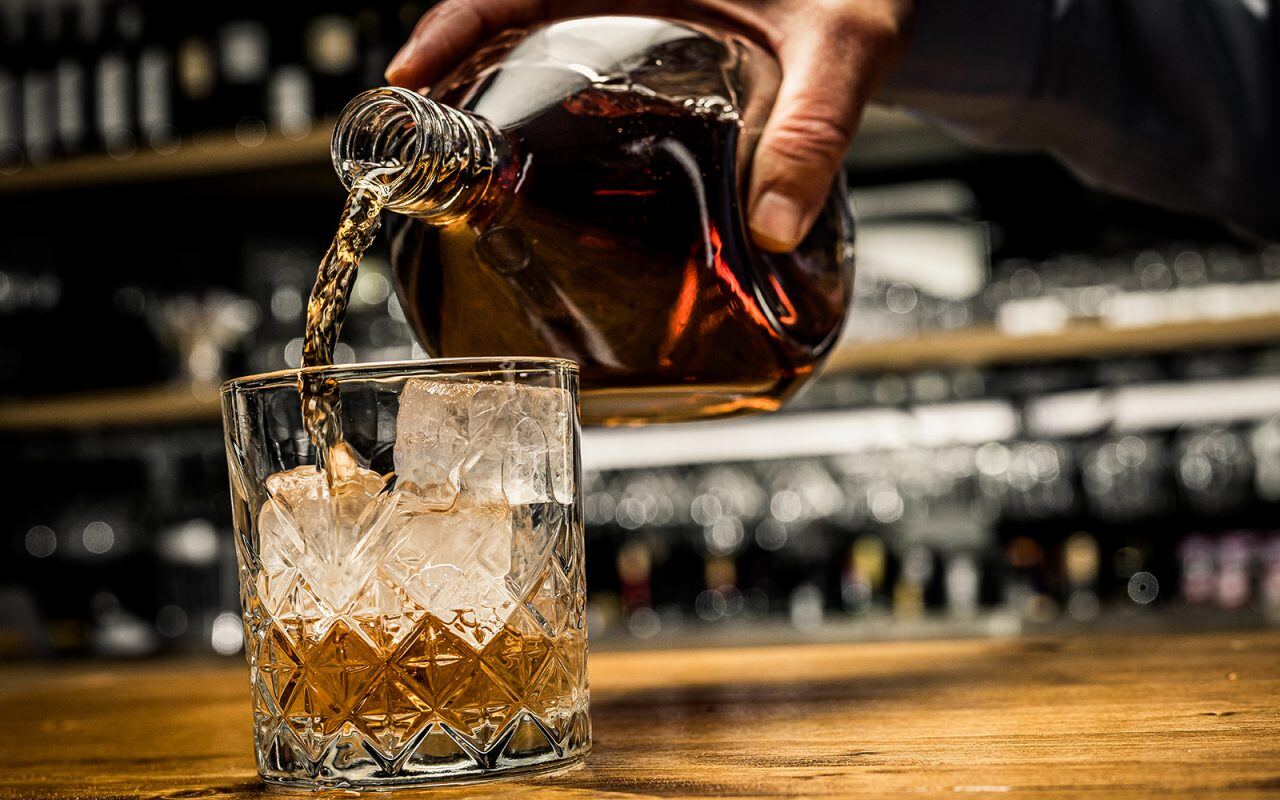
E. & J. Gallo finalized its acquisition of Four Roses Bourbon from Japan's Kirin Holdings, bringing one of America's most iconic bourbon brands back under U.S. family ownership for the first time in 83 years. Kirin had owned Four Roses since 2002 and initially shopped the brand at a $1 billion valuation last October before settling on a deal worth up to $775 million, including roughly $50 million in contingent earnout tied to revenue targets.
This is Gallo's second major American whiskey investment following its 2022 acquisition of Horse Soldier Bourbon, and it significantly strengthens the family-owned company's position in premium spirits. Four Roses' team, including master distiller Brent Elliott, will remain in place. At a time when core spirit categories like whiskey and vodka are contracting in both dollars and volume, Gallo is betting that a heritage brand with ten distinct bourbon recipes and strong international distribution — particularly in Europe and Japan — can outperform the category. It is a premiumization play in a segment that badly needs one.
2. Sazerac Acquires Dirty Shirley, Doubling Down on RTD
The owner of Fireball, Buffalo Trace, and BuzzBallz acquired Dirty Shirley, the vodka-spiked ready-to-drink take on the classic Shirley Temple, in a deal announced March 20. Financial terms were not disclosed. Dirty Shirley was founded in 2022 in Austin by Adam Kost and currently offers three canned cocktails ranging from 5.9% to 12% ABV.
The move underscores just how aggressively major spirits companies are pivoting toward RTD. IWSR forecasts that ready-to-drink cocktails will be the only alcohol category to post growth in 2026. Spirits-based RTDs are already up 40% year-to-date and now account for a quarter of all RTD dollars, nearly tripling their share since 2021. Sazerac cited the Shirley Temple's "major comeback" as a driver — nostalgia-fueled, lower-ABV, flavor-forward products that meet the consumer where they're actually drinking. With BuzzBallz and now Dirty Shirley in the portfolio, Sazerac is assembling one of the more diversified RTD lineups in the industry.

3. Five Former Southern Glazer's Executives Indicted in Bribery Scheme
A federal grand jury in Oakland indicted five former California executives of Southern Glazer's Wine & Spirits — the largest alcohol distributor in the United States — for their alleged roles in a years-long pay-to-play scheme at grocery chains across the state. The indictment, unsealed March 6, charges the former employees with bribing grocery store employees to steer wine purchasing decisions and shelf placement, then creating fake financial documents to cover it up.
The alleged bribes included lavish golf trips to Monterey, Maui, Las Vegas, and Florida, along with hotel stays that in one case exceeded $11,000 in charges. The scheme reportedly ran from 2016 to 2024 and affected hundreds of California grocery stores. The defendants — none of whom were employed by Southern Glazer's at the time of the indictment — were scheduled for initial appearances in federal court on March 25.
For an industry already navigating significant distribution-tier instability — Breakthru's 500-person layoff in February, RNDC's exit from California — this case adds another layer of uncertainty. It raises hard questions about oversight, compliance culture, and the degree to which pay-to-play practices may extend beyond a single region or company. Anyone managing supplier-distributor relationships in beverage alcohol should be paying close attention.
4. Uncle Nearest Bankruptcy Filing Rejected; Receiver Seeks Sanctions
The unraveling of Uncle Nearest, once one of the fastest-growing whiskey brands in the country, accelerated in March when CEO and co-founder Fawn Weaver filed for Chapter 11 bankruptcy protection on March 17 — only to have a judge dismiss the petition two days later.
U.S. Bankruptcy Judge Suzanne Bauknight ruled that Weaver was not authorized to file on behalf of the company because Uncle Nearest has been under court-appointed receivership since late 2025, after Farm Credit Mid-America filed suit alleging the company defaulted on more than $100 million in loans. The receiver, Philip Young, now alleges Uncle Nearest owes approximately $200 million and is insolvent. Young filed an expedited motion for $75,000 in sanctions against Weaver for what he described as a "wanton and wilful violation" of the court's receivership order.
Weaver and Uncle Nearest's other founders have countersued Farm Credit in New York, alleging the lender engaged in a "smear campaign" by circulating false claims of missing inventory and financial misconduct. The legal battle is far from over, but for a brand that was celebrated as a trailblazer in American whiskey just two years ago, the speed of the collapse has been staggering.
5. The "Boomerang CEO" Trend Hits Food & Beverage
Three major food and beverage companies have now brought back former CEOs to lead them through a period of industry turbulence, a pattern Food Dive called one of the more telling leadership trends in recent memory.
Jim Koch returned to Boston Beer, the company he founded, after originally departing the CEO role in 2001 following 17 years at the helm. Joe Scalzo was reinstalled as president and CEO of Simply Good Foods in late January after the board ousted Geoff Tanner following a period of gross margin erosion and stagnation at the Quest and Atkins brands. Scalzo had previously held the top job from 2017 to 2023. And Jeffrey Ettinger, who led Hormel Foods from 2005 to 2016, is back as interim CEO while the company searches for a permanent replacement.
The message from these boardrooms is clear: when the environment gets volatile — and with consumer demand softening, margins compressing, and innovation cycles accelerating, it is volatile — proven operators with institutional knowledge become the safest bet. For companies evaluating their own leadership teams, it is worth asking whether the instinct to hire externally and chase new playbooks might be less effective than doubling down on leaders who already know where the levers are.
6. Conagra Returns to Organic Growth as Frozen and Snacks Gain Traction
Conagra Brands reported its first positive volume reading in several quarters in its fiscal Q3 2026 results, with organic net sales up 2.4% and organic volume increasing 0.5% year-over-year. The bright spots were frozen foods and meat snacks, with the meat snacks business up 9% in dollars and 10% in volume through Q3.
The results were not uniformly positive. Adjusted operating margin compressed by more than 200 basis points to 10.6%, and adjusted EPS of $0.39 missed consensus estimates. But after multiple quarters of top-line decline, the return to organic growth — even modest growth — marks a meaningful inflection point for one of the largest packaged food companies in the country.
The broader signal here is that legacy food companies are not dead. They are just being forced to earn growth differently. Conagra's frozen and snacking portfolio is outperforming precisely because those categories align with how consumers are actually eating: convenience-driven, portion-conscious, and increasingly willing to pay for better quality within familiar formats.
.jpg?width=5257&height=3505&name=Pet%20Industry%20Photo%20(1).jpg)
7. Pet Sector M&A Doubles Year-Over-Year
Capstone Partners' March 2026 pet sector report revealed that deal activity has more than doubled compared to the same period last year, with 18 announced or completed transactions in year-to-date 2026 versus just eight in 2025. Vet & Health led with nine deals, followed by Food with six and Services with three.
The acceleration reflects a combination of delayed transactions from 2025 finally materializing and a genuine rebound in buyer appetite. Functional pet food and treats are driving much of the food-segment activity, mirroring the same health-and-wellness trends reshaping human food and beverage. Consumers who read ingredient panels on their own protein bars are doing the same for their dog's food, and the brands that deliver transparency, functional benefits, and clean-label formulation are commanding premium valuations.
Capstone expects deal momentum to continue building through the rest of the year, with Services, Vet & Health, and Products segments all showing strong pipelines. For pet companies evaluating their growth strategies, the window to position for acquisition or to bring in the leadership talent needed to scale independently is open — but the competition for both is intensifying.
What This Month's CPG News Means for the Industry
March drew a clear line between companies operating with conviction and companies caught without it.
Gallo spent $775 million to bring an iconic bourbon brand home. Sazerac moved quickly on the fastest-growing format in beverage alcohol. Three major food and beverage boards reached back to leaders who already know how to navigate uncertainty. Conagra proved that a legacy portfolio can find growth when it's pointed in the right direction. Pet sector buyers doubled their activity because functional, health-forward brands are worth competing for.
On the other side, a bribery scandal exposed years of alleged corruption in beverage distribution, and one of the most celebrated whiskey brands of the past decade saw its founder's bankruptcy petition rejected by a court that no longer considers her the one in charge.
The companies making the best decisions right now share two things: they know exactly what consumer demand looks like in 2026, and they have the leadership in place to act on it. The ones struggling are the ones where either the strategy or the governance, or both, failed to keep up.


.jpg?width=352&name=Human%20Resources%20Photo%20(1).jpg)